What You're Actually Building
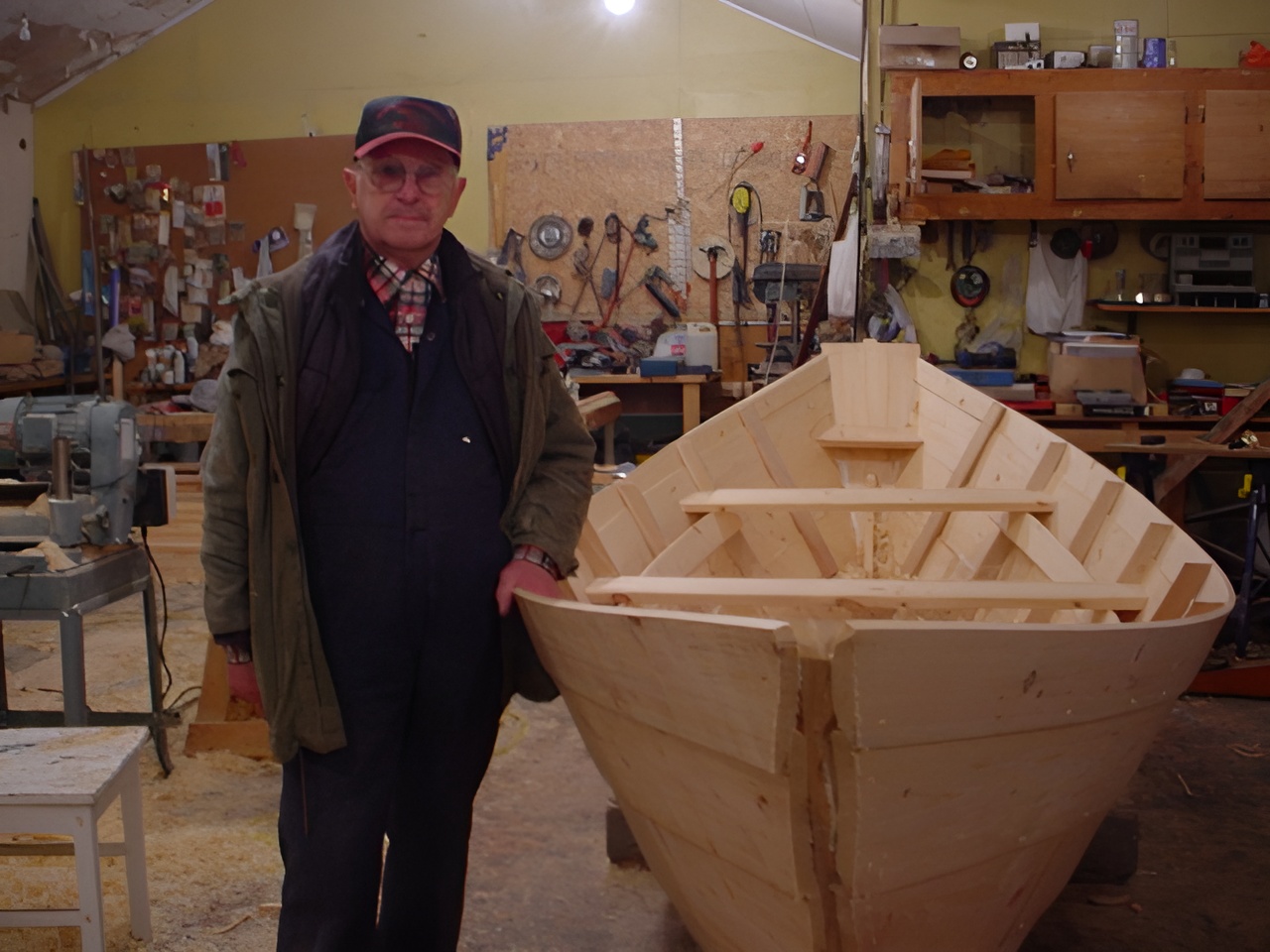
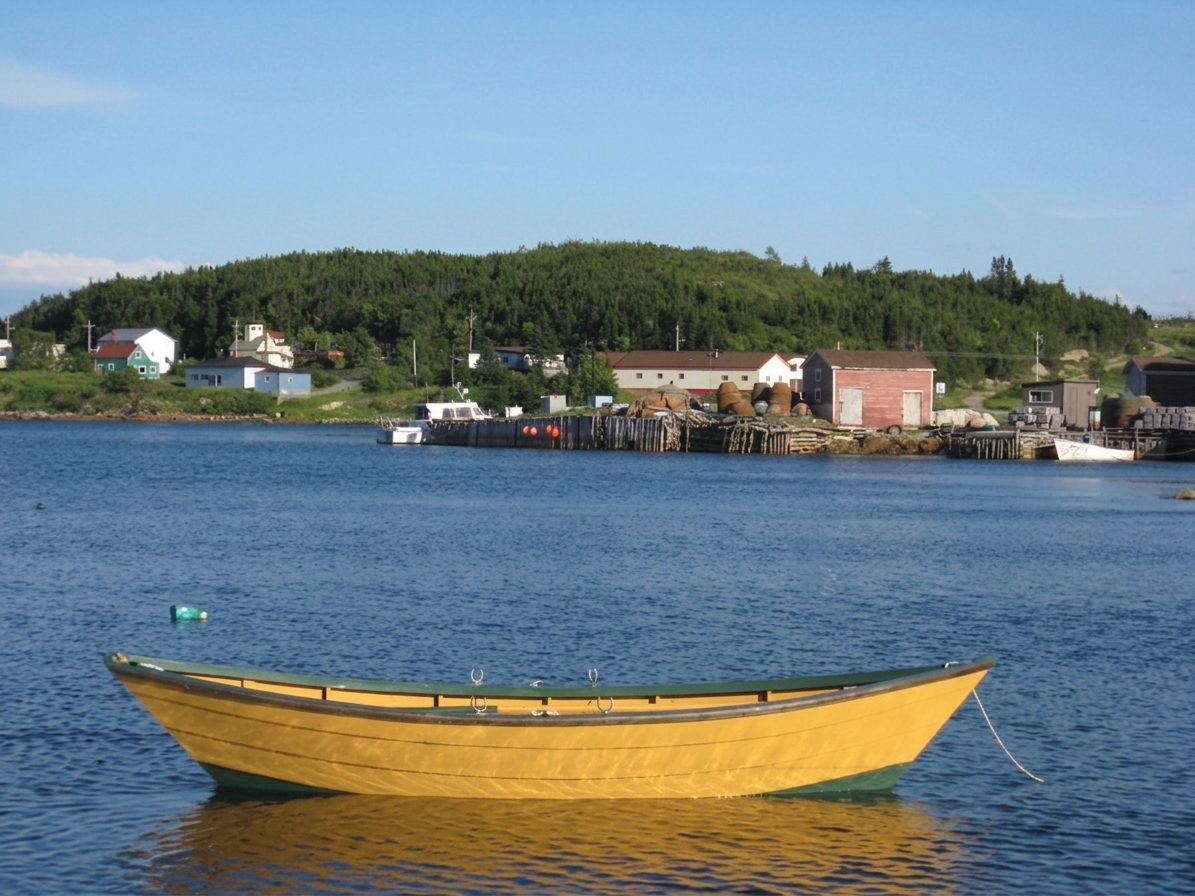
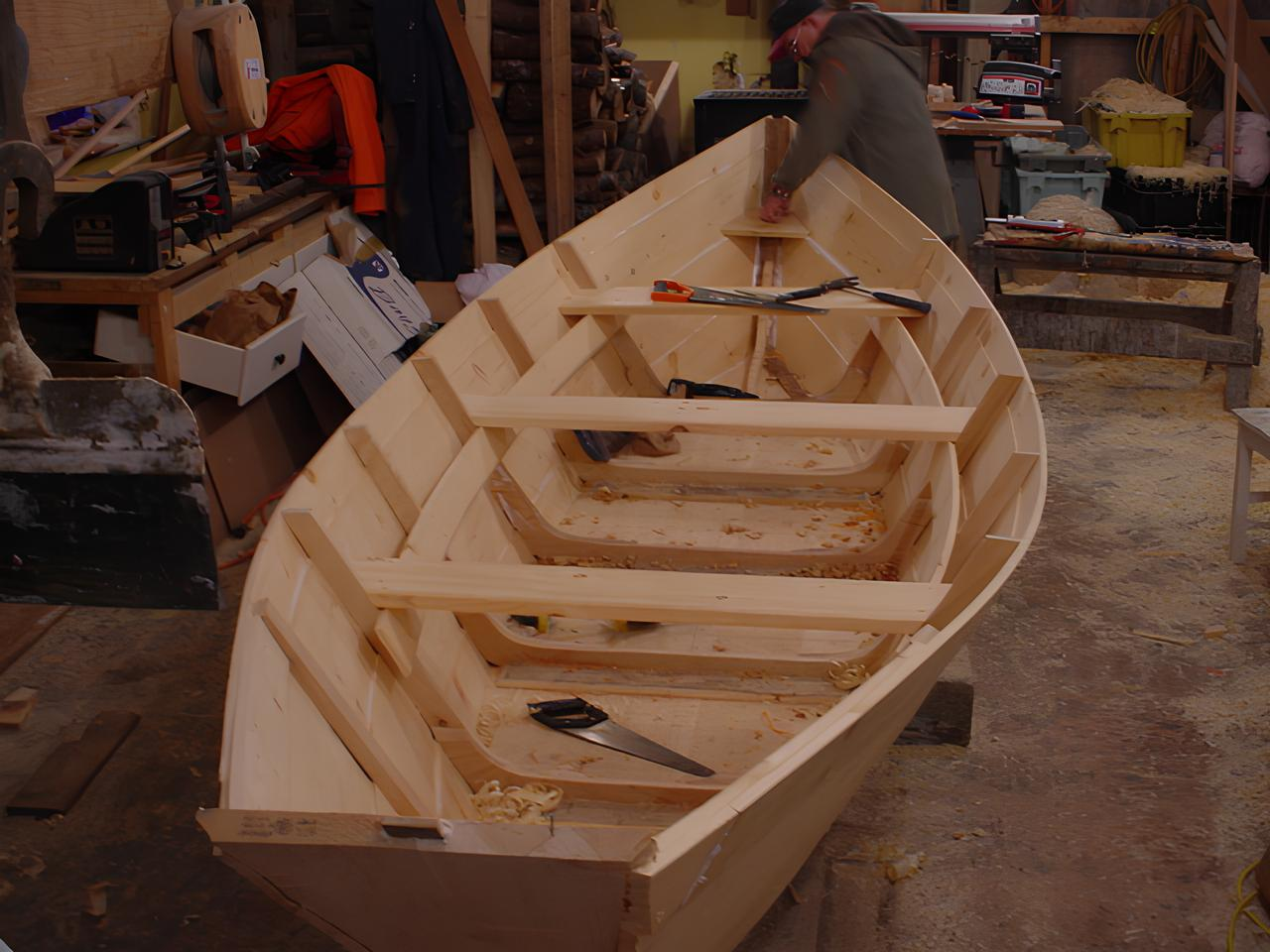
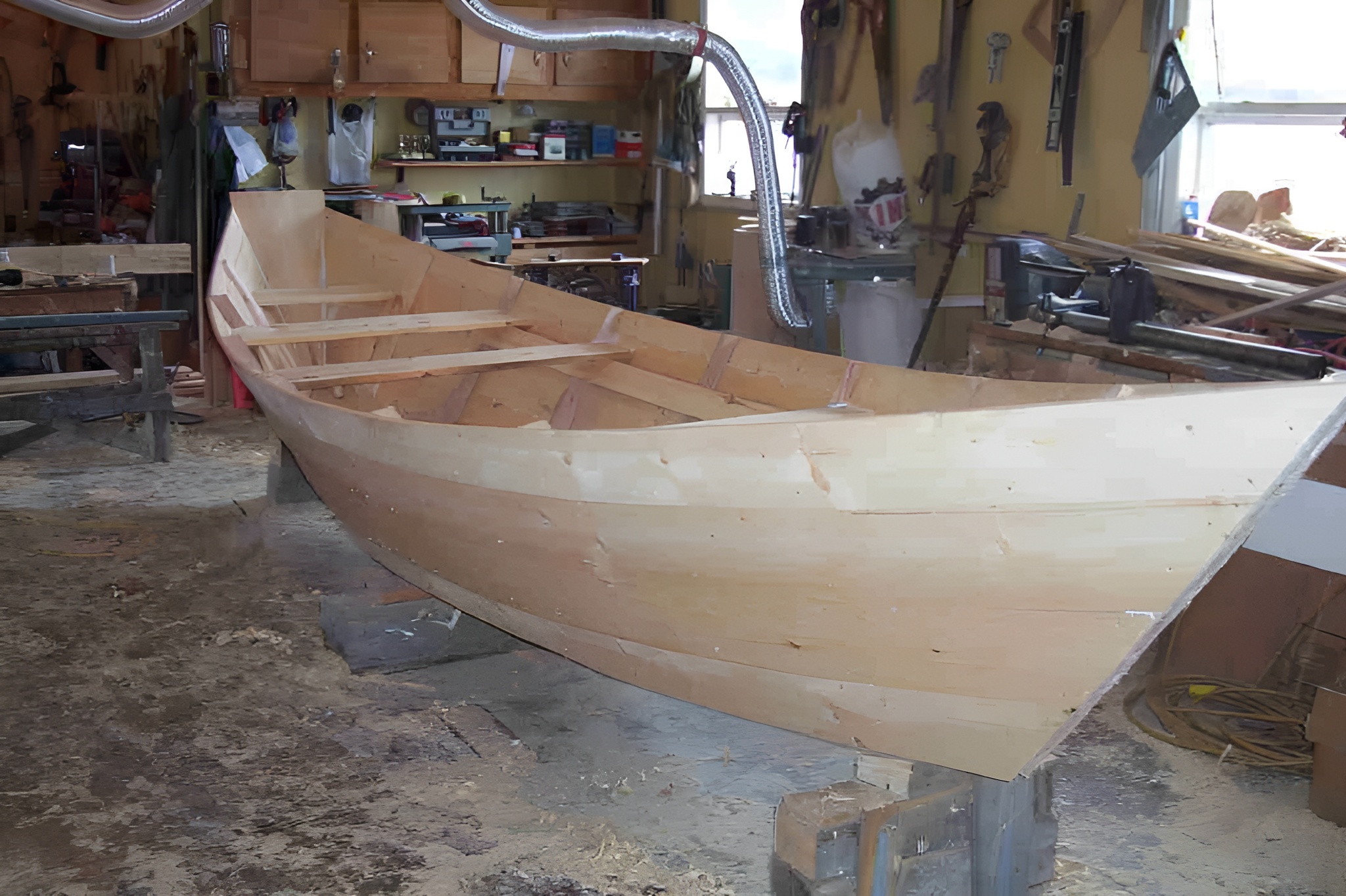
A Grand Banks dory is a beautiful flat-bottomed, high-sided wooden boat with flared sides and a sharp bow. The design evolved over centuries of hard use on the North Atlantic - it's stable enough to fish from, light enough for one person to handle, and simple enough to build without a shipyard.
The version in these plans is 16' stem to stern, 12' on the bottom, 5' beam, roughly 300 lbs when finished. It will carry 1,200 lbs. It's built with traditional timber planking - not plywood stitch-and-glue, not fiberglass over foam. Real timber, traditional method, the way it's been built in Newfoundland for generations.
Not a beginner at woodworking? These plans were written so a complete beginner can follow every step. If you've built furniture or framed a deck, you'll find this straightforward. If you've never built anything, that's exactly who these plans were written for - through 36 complete rewrites until Wilbert approved them.
Tools and Materials
Tools
You don't need specialized boatbuilding tools. The standard shop kit handles everything:
- Circular saw or hand saw
- Drill with bits
- Hammer and mallet
- Clamps (you'll want 6-8)
- Tape measure, square, level
- Spokeshave or block plane (for shaping planks)
- Sander or sandpaper
Every tool is photographed in the plans so there's no guessing about what you're looking for at the lumber yard or hardware store.
Materials
Total materials cost runs $300-600 USD depending on your location and wood choices. The plans include a complete materials list with photos of every item, multiple wood species that work, and substitution guidance for builders outside North America. An Australian customer adapted the plans using local marine plywood with great results.
Primary materials: spruce, pine, or fir for the frame and planking; oak or hardwood for the transom; marine-grade fasteners throughout; exterior wood glue.
The Build Stages
The build breaks into seven clear stages. Wilbert could finish start to finish in seven to ten days. Most hobby builders working partial weekends finish in four to eight months. The plans walk through every step of every stage with photos.
-
1
Setup and materials gathering Read the full plans before you start - Wilbert is specific about this. Get all your materials in hand. Set up your workspace. Know where you're going before you take the first cut. Half a day to a full day.
-
2
Building the bottom board The foundation of the boat. Gets the rocker (the curve that lets the bow and stern rise) built in correctly from the start. This stage sets everything that follows - take it slowly.
-
3
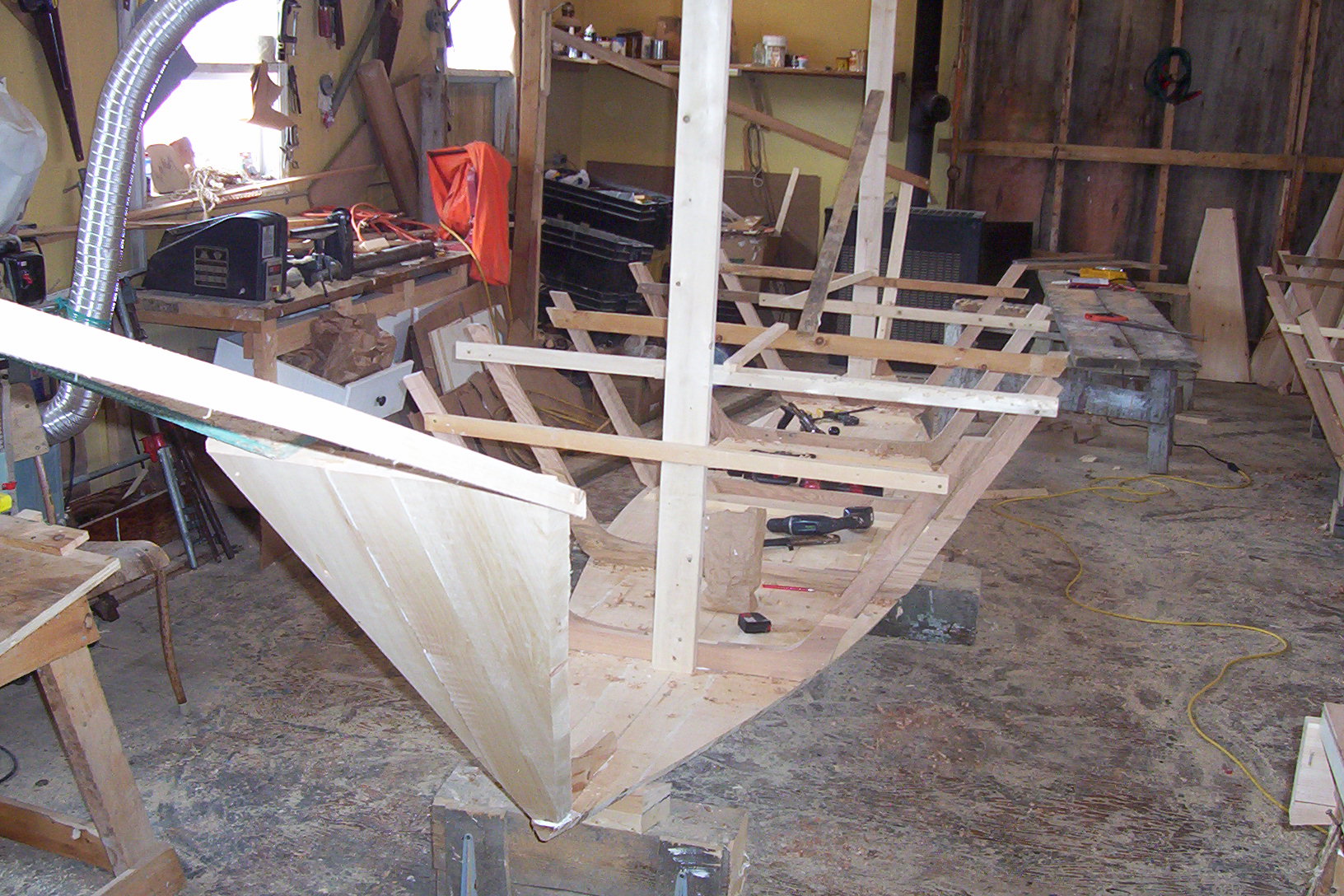
Setting up the frame (moulds and transom) The skeleton of the boat. Moulds define the shape of the hull. The transom (back wall) goes in here. This is where the dory's distinctive flared shape starts to become visible.
-
4
Planking the sides The most satisfying stage for most builders. Strakes (planks) go on one at a time, each one bent to follow the curve of the hull. The dory shape emerges. Photos cover every plank.
-
5
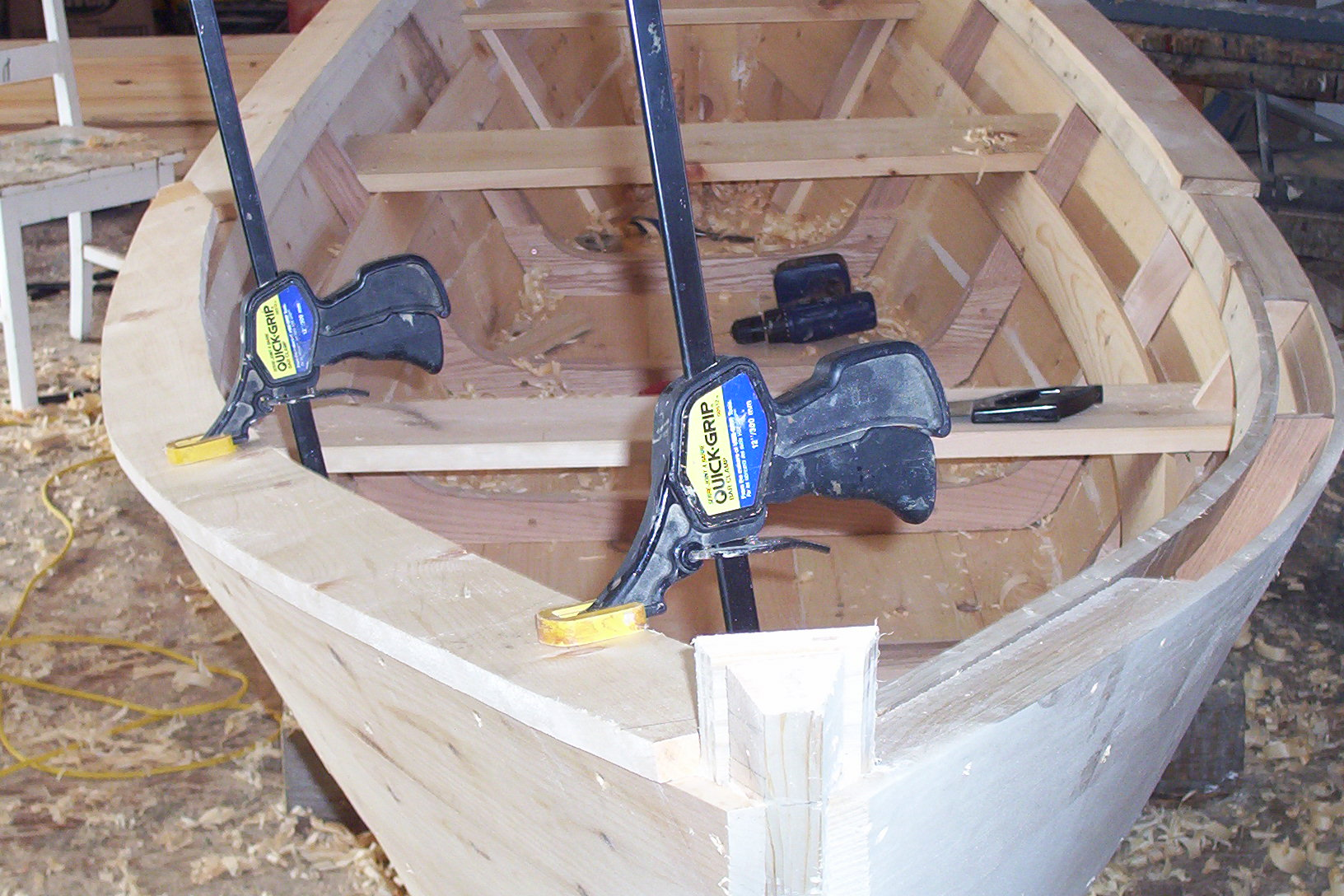
Fitting the stem and gunwales The stem (front point of the bow) and gunwales (the top rail running the length of the boat) go in. This is where the boat starts to look like a finished dory from a distance.
-
6
Interior work - seats, thwarts, flotation Rowing seats, the centre thwart, the bow and stern seats. Buoyancy chambers if you want them. The plans include Wilbert's specific seat placement from decades of fishing - positioned for balance and work.
-
7
Caulking, sealing, and finishing Making it watertight. Paint or varnish. Wilbert's guidance on where to caulk, how much, and the finishing sequence that gives the dory its traditional look. Your boat, your colours.
What Makes a Grand Banks Dory Different
There are dozens of dory designs and hundreds of wooden boat plans available. The Grand Banks dory is a specific, historically proven design. A few things set it apart from generic "dory-style" plans:
- Traditional timber planking, not plywood. Plywood is faster and cheaper. Traditional planking is stronger, repairs more easily, and builds in a way you can actually explain to your grandchildren. It's also how they built the boats that fished the Grand Banks for 300 years.
- No lofting required. Traditional boat plans often give you lines drawings and expect you to scale them up yourself - a process called lofting that requires a full-sized working drawing on the floor. These plans eliminate that entirely. Every measurement is given at full scale.
- Proven in serious conditions. The Grand Banks design was used commercially. 1,200 lb capacity. Stable enough to fish from. These aren't decorative dimensions - they're working numbers.
Frequently Asked Questions
Do I need boatbuilding experience?
No. The plans were specifically written through 36 complete rewrites to be accessible to someone with zero boat-building background. General woodworking experience helps but isn't required. If you can follow instructions and work carefully, you can build this boat.
How much does it cost to build?
Materials run $300-600 USD depending on your location and wood choices. The plans include complete materials lists with photos and substitution options for builders outside North America.
How long does it take?
Wilbert Weir, who designed these plans, built start to finish in seven to ten days. Most hobby builders working partial weekends report four to eight months. The build can be paused and restarted without issues.
What if I get stuck?
Email Fraser. He responds personally. No time limit - before you start, during the build, after you're done. This is part of what's included with every set of plans.
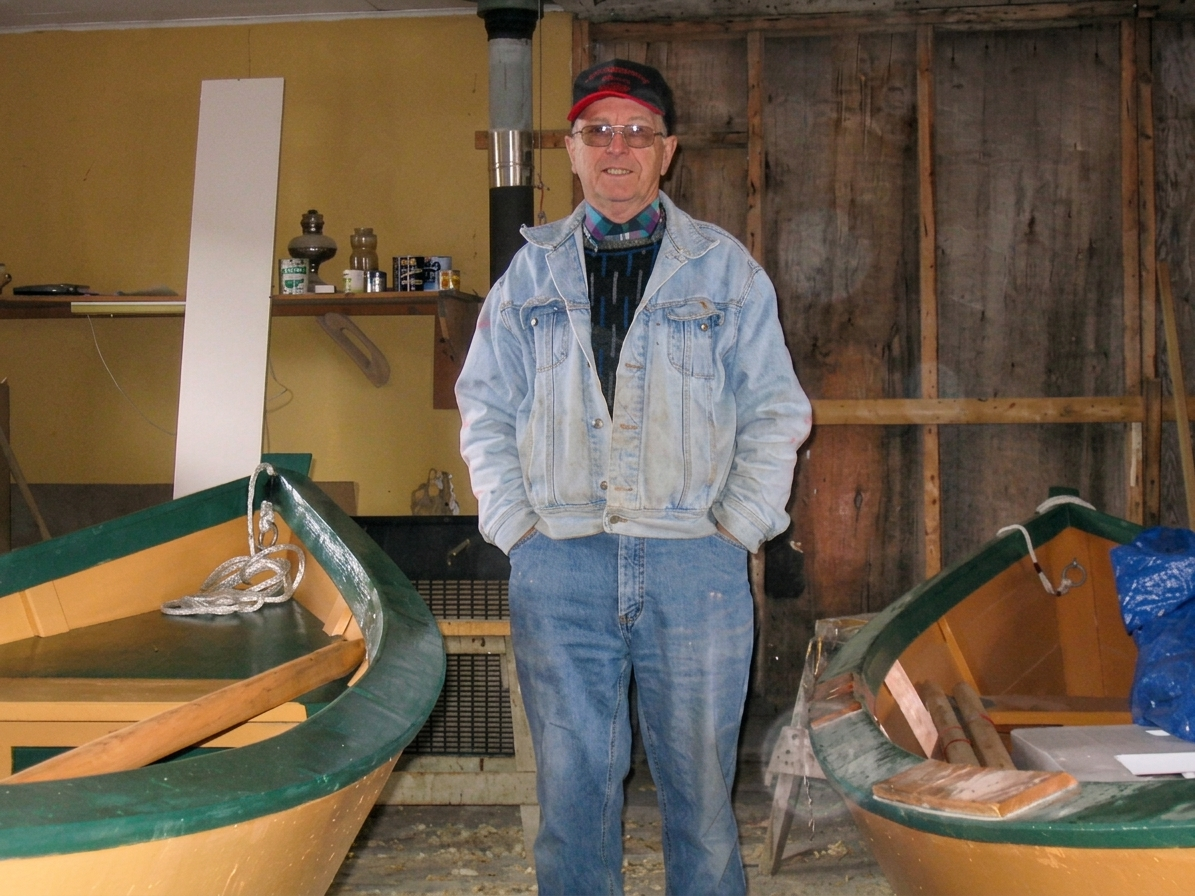
Wilbert's father fished the Grand Banks from dories his grandfather built. Four generations of knowledge, passed down by hand - never written down. Fraser Wheaton found Wilbert at 90 and spent years sitting with him, documenting every step through 36 complete rewrites until a complete beginner could follow each one without stopping. Wilbert is now 97. These plans are what that knowledge looks like on paper.
Ready to build? The full plans include every step, every measurement, all 63 photos, and unlimited support from Fraser. See the complete plans at DoryPlan.com →
Real Builds from Real People
Builders have finished these dories in garages, backyards, and workshops across North America, Australia, and New Zealand. Most had never built a boat before.
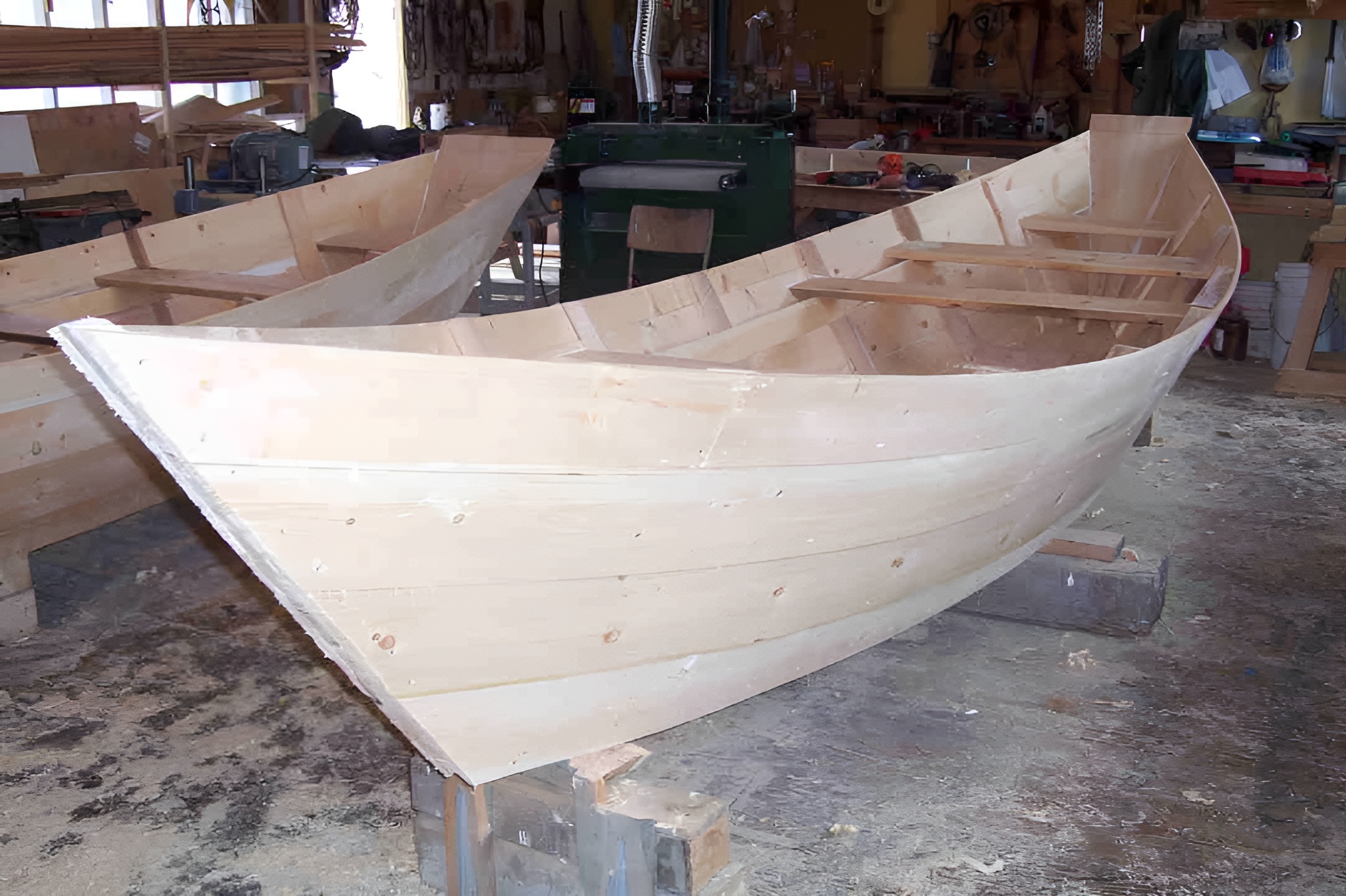
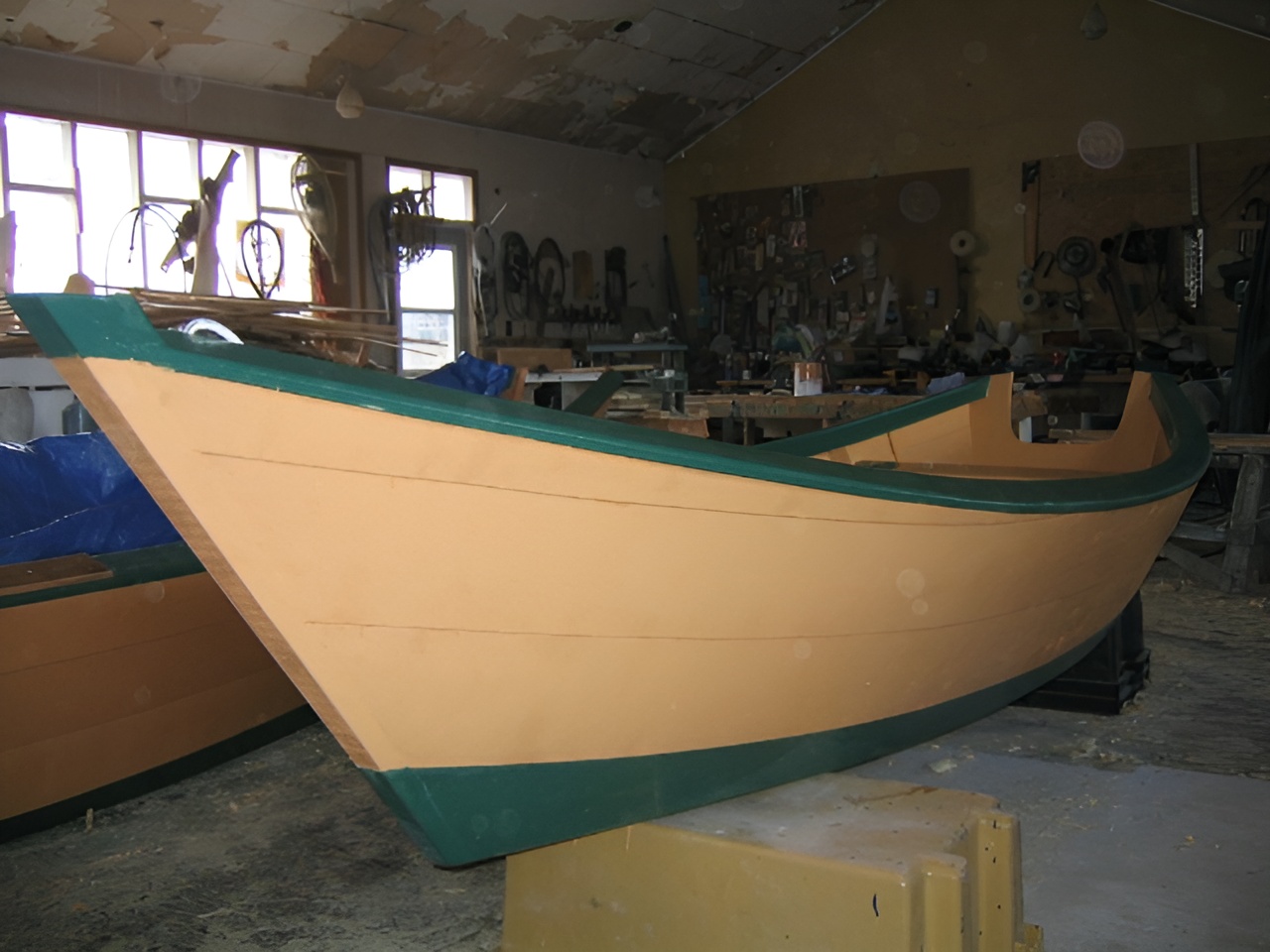
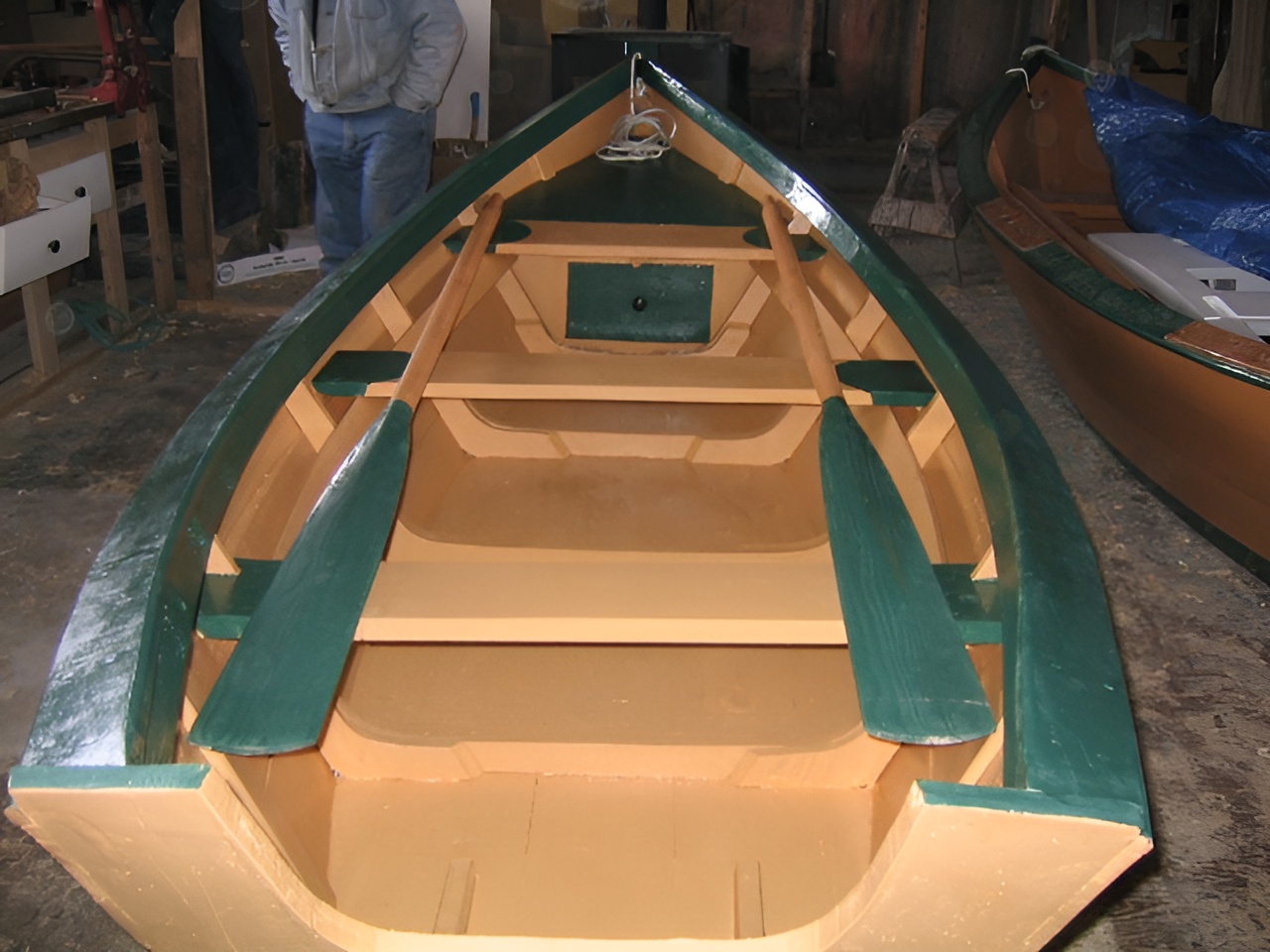
See the builder gallery → - real completed dories, real builders, real results.