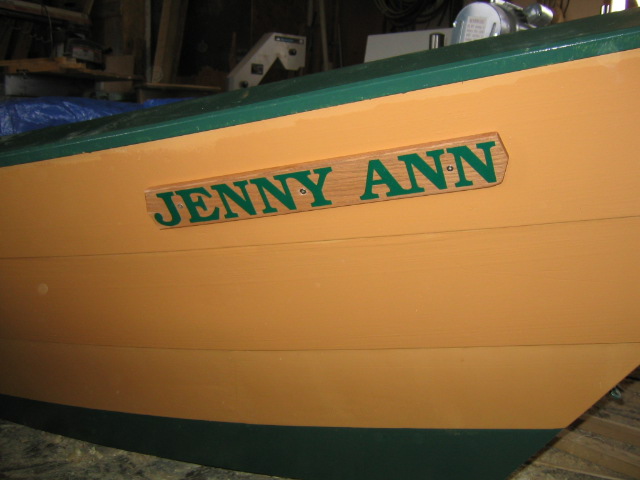
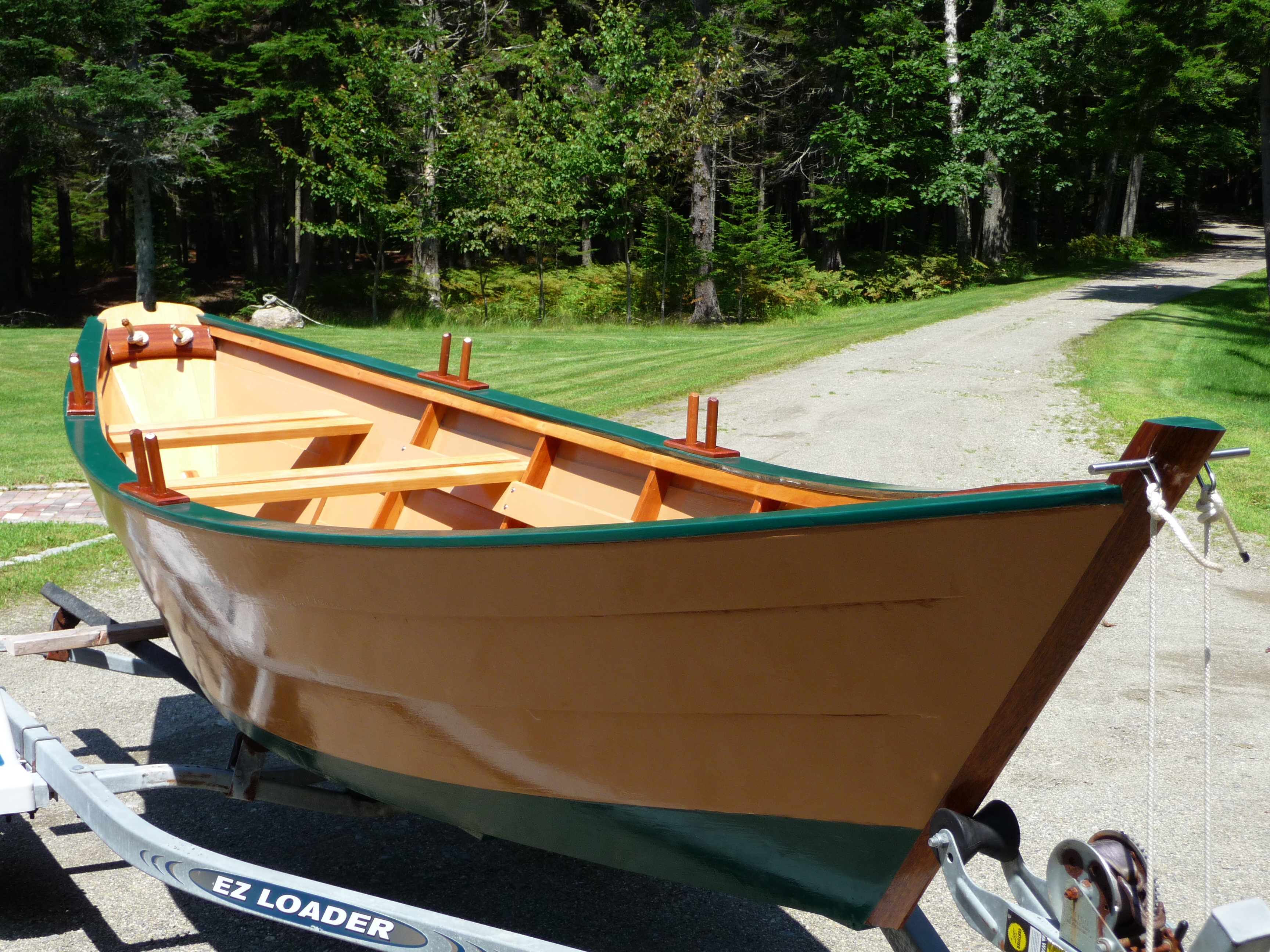
If you look closely at a Grand Banks dory, you'll notice the planks don't sit edge-to-edge. Instead, each plank overlaps the one below it - like clapboard siding on a house. This is lapstrake planking (also written lapstreak, known in Britain as clinker-built construction).
It is one of the oldest boat-building techniques in the world, used by Vikings, New England fishermen, and the builders of the Grand Banks fishing fleet.
What Is Lapstrake Planking?
Each hull plank - called a strake - overlaps the plank below it by a fixed amount. On the Grand Banks dory, two inches. The overlapping edge is cut to a bevel so the surfaces mate cleanly, sealed with marine glue and fastened with screws.
The result: longitudinal ridges running the length of the hull that add stiffness without weight and deflect spray downward.
Lapstrake vs. Carvel Planking
In carvel construction, planks are laid edge-to-edge to create a flush surface. Carvel is more common on larger vessels. The Grand Banks dory uses lapstrake because:
Lighter - the overlapping joint adds rigidity without
heavy framing.
Stronger for its weight - overlapping seams act like
longitudinal stringers.
More flexible - the hull can work in a seaway without
opening up.
Traditional - every Grand Banks dory uses this
method.
The Four Strakes
The Garboard Strake - the lowest plank. It carries a 2″ bevel on its top edge only; the bottom edge sits flat against the beveled dory bottom. This is the most critical strake to get right.
The Second and Third Strakes - beveled on both edges. Getting both bevels correct is the primary challenge of the entire build.
The Shear Plank - the topmost plank along the sheer line. Beveled on one edge only. Must be custom-fitted to width.
Nothing else produces quite the same combination of lightness, strength, and beauty.
Cutting the Bevel
The 2″ bevel tapers from a marked line to a point at the edge. There are several methods to cut it:
Table saw - the fastest approach.
Hand plane or electric hand plane - the traditional
method, and the most satisfying.
Electric planer with beveled block - works well with
practice.
Lumberyard - many will cut bevels for you if you ask.
The Glue-Up
Each strake is glued along the bevel of the one below, then screwed to the timbers. Marine glue (#920 or #2000) is applied generously - squeeze-out confirms full coverage. Short 5/8″ screws every few inches through the overlapping bevel secure the joint mechanically.
The combination of a tight-fitting bevel, marine glue, and mechanical fasteners makes lapstrake joints essentially watertight for the life of the boat.
Why Lapstrake Still Makes Sense
In an era of fibreglass, epoxy, and CNC plywood, lapstrake survives because nothing else produces the same combination of lightness, strength, and beauty. A lapstrake hull is a living thing - you can see the individual character of each plank. UNESCO recognized the Nordic clinker boat tradition as Intangible Cultural Heritage in 2021, further underscoring the enduring significance of this ancient technique.
The Grand Banks Dory Plans walk you through the complete lapstrake process step by step. 63 photos, every measurement, and personal support from Fraser.
See the Full Plans