The Grand Banks and the Cod Fishery
The Grand Banks of Newfoundland. Even the name carries weight. Stretching across hundreds of miles of shallow ocean southeast of the island, the Banks were for four centuries the most productive fishing grounds on earth - and one of the most dangerous workplaces in human history. At the centre of that history is a small wooden boat: the dory.
European fishermen began working the Grand Banks shortly after John Cabot's 1497 voyage reported waters so thick with cod that baskets could be lowered into them and pulled back full. By the 16th century, vessels from England, France, Portugal, and Spain were making the Atlantic crossing annually to harvest the Banks.
The Newfoundland cod fishery grew into one of the largest industries in the western hemisphere, employing thousands of men and feeding millions of people across Europe and the Americas for nearly four hundred years.
The fish were abundant. Getting to them was the problem.
Enter the Dory
The solution was a small, flat-bottomed boat light enough to be carried on the deck of a fishing schooner, strong enough to survive the North Atlantic, and simple enough to be built in large numbers by local craftsmen.
No one knows exactly when the first fishing dory appeared, but by the mid-19th century, the dory had become the standard small boat of the Grand Banks fishery. A schooner - typically 70 to 100 feet long - would carry anywhere from 8 to 16 dories nested on her decks. Once the vessel reached the fishing grounds, the dories were launched and each fisherman rowed out alone or in pairs to set trawl lines, returning to the schooner when their boat was loaded.
The Design That Made It Work
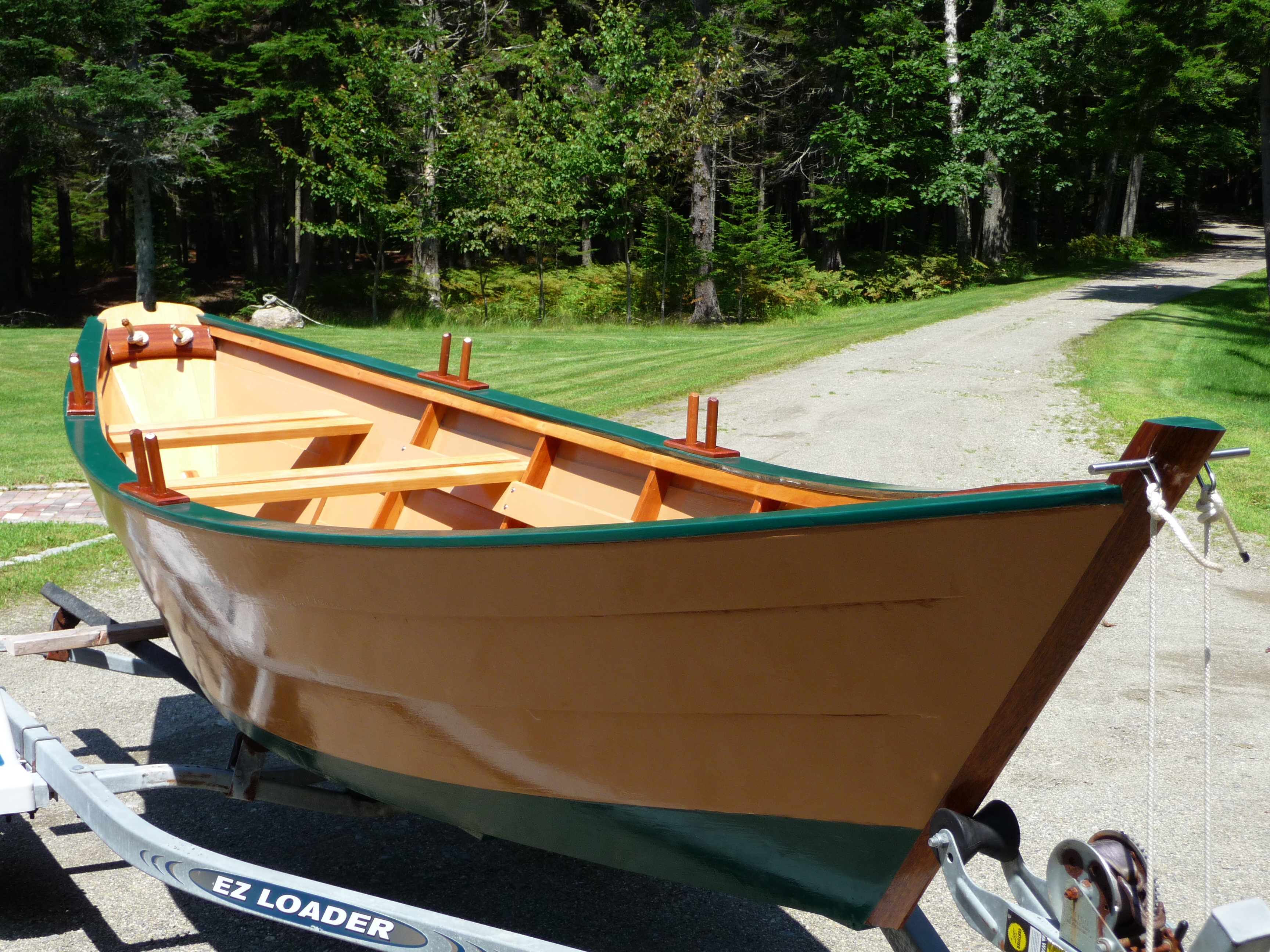
The Grand Banks dory succeeded because its design was perfectly suited to its environment. The flat bottom meant it could be stacked and nested on deck. The flared sides meant it became more stable as it was loaded with fish. The high freeboard meant it could survive steep Atlantic swells that would swamp a lower boat.
The rocker - that 2-inch curve in the bottom from center to ends - allowed the dory to pivot quickly when the fisherman needed to manoeuvre in a chop. And the relatively narrow beam meant it could be rowed efficiently for miles.
The dory didn't require sophisticated tools or materials. Flat pine boards, oak ribs, a few pounds of screws and nails, some tar or caulking - and any competent boat builder in coastal Newfoundland could produce a seaworthy dory in a matter of days.
Life on the Banks
Fishing from a dory was gruelling, dangerous work. A man alone in a 16-foot open boat, far from the mother schooner, in waters prone to sudden fogs, gales, and icebergs, was as vulnerable as a person could be.
Dorymen were lost regularly. Fog would descend while they were fishing and they couldn't find their way back. Gales would spring up faster than they could row. Some were run down by other vessels in the mist. The ones who survived combined exceptional seamanship with a deep knowledge of the weather, the currents, and the character of their boats.
Howard Blackburn, an American doryman who lost his fishing partner and his gloves in a 1883 gale, rowed 60 miles to shore with frostbitten, curled hands that he had shaped around the oars before they froze - a feat that remains one of the most astonishing feats of survival in maritime history.
On Howard Blackburn's legendary survival
The Decline of the Dory Fishery
By the 1940s, the traditional dory-and-schooner fishery was giving way to engine-powered vessels and new fishing methods. Large trawlers could cover more ground, process more fish, and keep crews safer than the old schooner fishery. The last schooner-and-dory operations faded from the Banks through the 1940s and 1950s.
The cod stocks themselves - harvested for nearly 500 years - began to decline under the pressure of industrial-scale fishing in the 20th century. The Canadian government's 1992 moratorium on northern cod fishing ended the fishery entirely, at least temporarily. The stocks have never fully recovered.
The Dory as Heritage
The Grand Banks dory didn't disappear. It survived as a pleasure craft, a museum piece, and a living symbol of Atlantic Canada's fishing heritage.
Today, dories are built by hobbyists, craftspeople, and heritage preservationists across Newfoundland, Nova Scotia, New Brunswick, and New England. They are rowed on quiet harbours, displayed at maritime museums, and raced at wooden boat festivals. Each one is a direct link to the men who fished the Banks.
These plans carry forward the same building tradition described above. 63 photos, every measurement, and personal support from Fraser.
See the Full Plans