Marine Glue - Foundation of a Watertight Hull
One of the most important decisions in wooden boat building is what you use to hold it together. Wrong glue, wrong screws, or wrong sealing approach results in a boat that leaks.
On a lapstrake boat, marine glue does more than hold pieces together - it fills the microscopic gaps in wood-to-wood joints and prevents water from finding a path through.
On a lapstrake boat, marine glue fills microscopic gaps in wood-to-wood joints and prevents water finding a path through. Two types work well:
Sikaflex 291 - flexible one-component polyurethane adhesive/sealant. Remains slightly flexible after curing, allowing wood to move with temperature and moisture changes without breaking the bond. Sikaflex is the marine industry standard, trusted by shipyards and boat builders worldwide.
3M 5200 - polyurethane marine adhesive, very widely used. Excellent bonding strength, flexible cure. Nearly permanent - joints are extremely difficult to disassemble. Fine for hull joints that should never be separated. 3M 5200 has been trusted throughout the marine industry for over 50 years.
Apply a generous bead to every joint. Squeeze-out confirms full coverage.
Standard wood glues (Titebond, PVA) are not appropriate - they're water-soluble. Use only marine-rated polyurethane.
Epoxy (West System) provides excellent waterproofing but requires more careful handling - mixing ratios, temperature control, and PPE. For traditional plank-on-frame construction, polyurethane is simpler and equally effective.
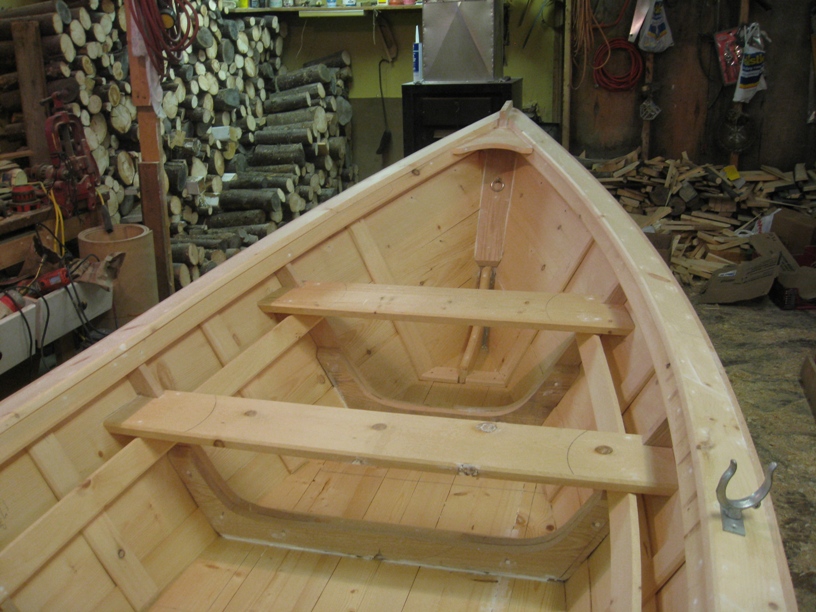
Stainless Steel Screws
Stainless steel is non-negotiable in a boat - regular steel corrodes and stains the surrounding wood brown.
Regular steel corrodes, staining wood and eventually failing. Galvanized is better but still corrodes over time. Stainless is non-negotiable.
316 stainless steel is the marine standard. It contains molybdenum, which provides superior saltwater corrosion resistance compared to 304 grade. For freshwater only, 304 is acceptable.
Five screw sizes for a Grand Banks dory:
- 5/8″ #8 - Through overlapping plank bevel
- 1¼″ #8 - Planking to timbers, bottom supports, inside casing
- 1½″ #8 - Risings to timbers
- 2″ #8 - Join timber pieces, thwarts to risings
- 2½″ #8 - Heavier structural connections
Bungs vs. Filler
Traditional practice: wooden plugs (bungs) glued with grain aligned, planed flush. For a painted boat - which the dory is - pine wood filler achieves the same result faster. Overfill slightly, let dry, sand flush. Invisible under paint.
Caulking
Traditional boats used cotton or oakum caulking with seam compound. The Grand Banks dory uses a different approach: marine glue on all joints combined with tight joinery means no gaps to caulk. If you have any doubts about a joint, Sikaflex applied from inside addresses it permanently.
Pine Wood Filler
One tub fills all screw heads and minor gaps. Apply generously, overfill slightly, let dry completely, sand flush. The difference between a professional and amateur finish.
Every fastener, every glue application, every screw size specified. 63 photos, every measurement, and personal support from Fraser.
See the Full Plans