What All Dories Have in Common
If you've been researching dory boats, you've probably encountered several different names: Grand Banks dory, bank dory, river dory, Swampscott dory, Gloucester dory. It can be confusing - especially when builders and sellers use these terms interchangeably, or incorrectly.
This article breaks down the main dory types, explains what makes each one distinct, and explains why the Grand Banks dory is widely considered the finest of them all.
All dories share a basic hull form: a flat or slightly curved bottom, flared sides that splay outward from bottom to top, and a narrow transom at the stern. This shape gives the dory its characteristic stability under load - the more weight you put in, the more the hull spreads into the water and the more stable it becomes.
That counterintuitive quality - getting more stable as it's loaded - is what made the dory so valued on the Grand Banks.
That counterintuitive quality - getting more stable as it's loaded - is what made the dory so valued on the Grand Banks, where fishermen filled them with hundreds of pounds of cod before rowing back to the mother schooner.
The Grand Banks Dory
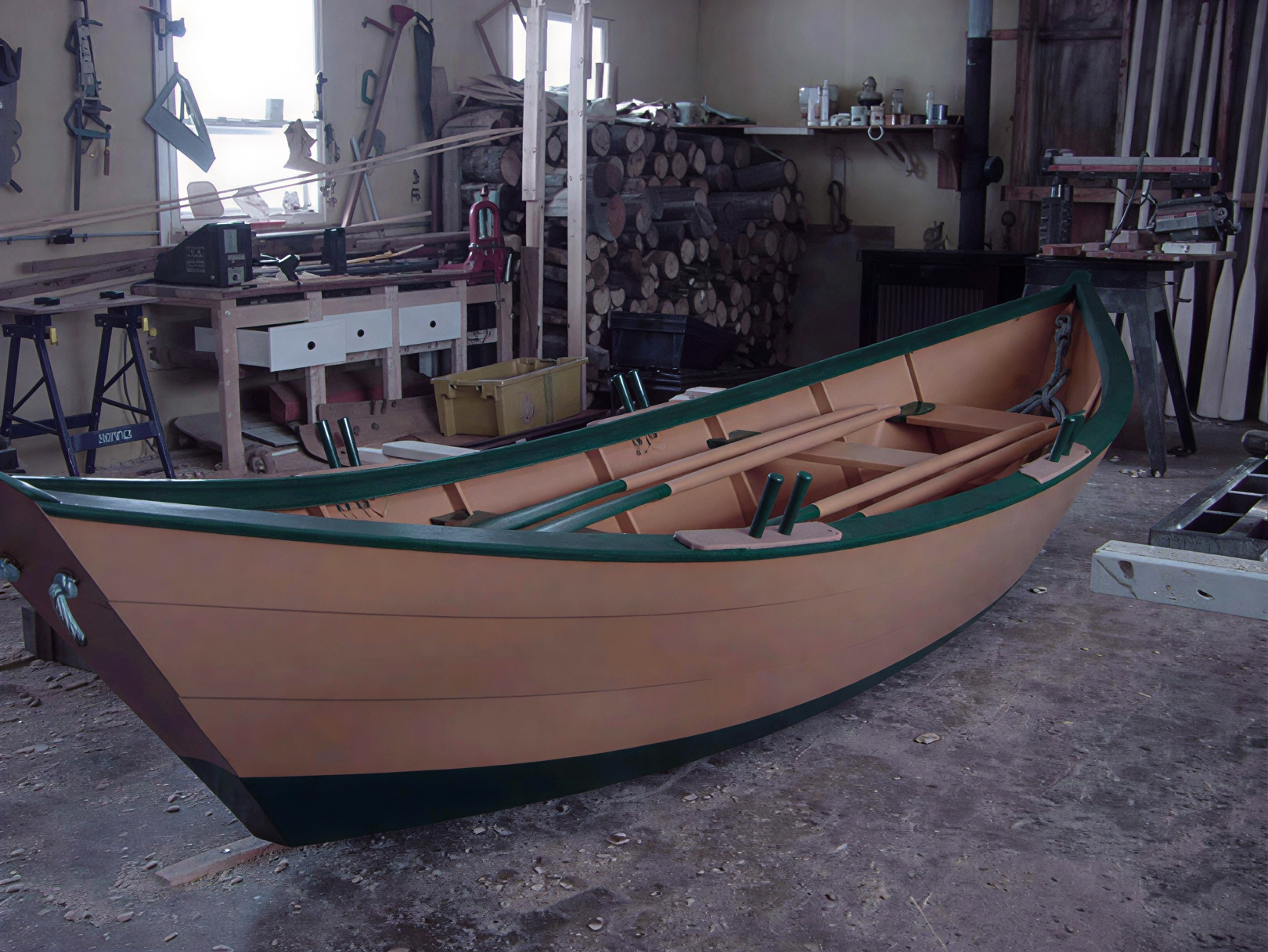
The Grand Banks dory is the original working dory, developed in Newfoundland and Nova Scotia for the Grand Banks cod fishery. Typically 14–18 feet, with a 12-foot flat bottom, high flared sides, raked stem, and distinctive raked transom.
Key characteristics:
- Flat bottom with pronounced rocker (centre sits 2 inches lower than ends)
- Lapstrake planking - planks overlap like clapboard siding
- Very high freeboard for rough-water capability
- Narrow enough to stack on schooner decks
- Designed to be rowed by one or two people
The Grand Banks dory is the most seaworthy of all dory types. A 16-foot Grand Banks dory can carry over 1,000 pounds of fish and still be rowed safely.
The Bank Dory (or Nested Dory)
The bank dory is an optimized version of the Grand Banks dory - built to nest efficiently. Schooners carried 8–12 dories stacked on deck. The bank dory's hull tapers more dramatically for tighter stacking. The bank dory and Grand Banks dory are very similar and often used interchangeably. For pleasure craft purposes, the difference is essentially cosmetic.
The River Dory
The river dory - also called the McKenzie River dory or drift boat - is fundamentally different. It evolved in the American Pacific Northwest for whitewater and river fishing.
Key differences:
- Much wider and flatter bottom
- Lower freeboard (shorter sides)
- More extreme rocker for river manoeuvrability
- Often pointed stern or very small transom
- Optimized for standing stability while casting
A river dory would be unsafe on the Grand Banks. A Grand Banks dory would be unwieldy on a river.
The Swampscott Dory
Originated in Swampscott, Massachusetts as a surf dory:
- More rounded bottom (slight curve rather than truly flat)
- Wider relative to its length
- Lower and beamier, more stable for near-shore use
- Less suited to open ocean conditions
More comfortable recreational boat in calm water, but gives up rough-water capability.
The Gloucester Dory
Named for Gloucester, Massachusetts. Essentially a variant of the Grand Banks dory, slightly beamier with a different stem profile. For practical purposes, interchangeable with Grand Banks plans.
So Which One Should You Build?
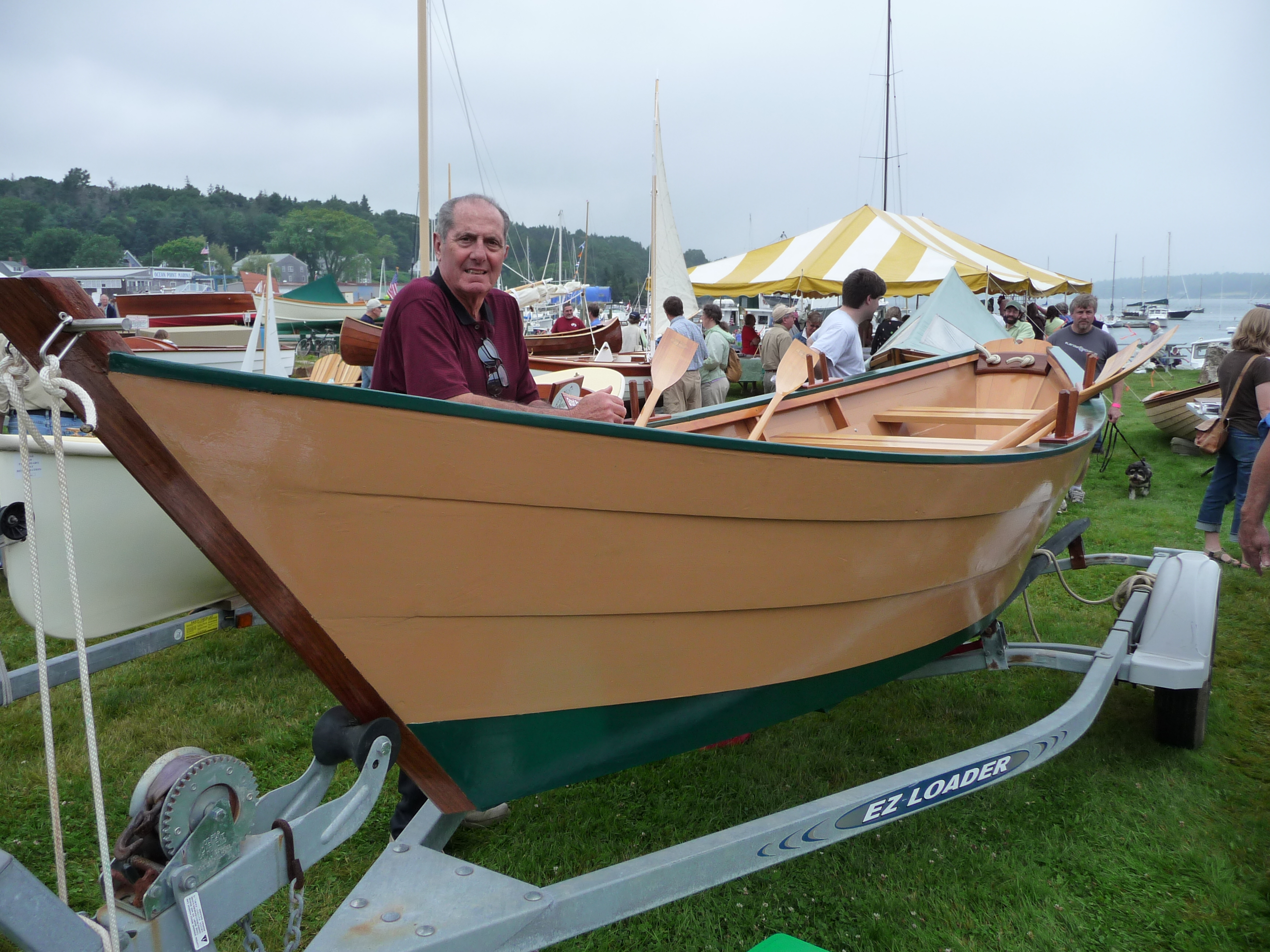
If your goal is a boat that rows beautifully, handles a small outboard, looks spectacular, and connects you to one of the great traditions of working watercraft - the Grand Banks dory is the right choice. It is the original, the archetype, and the one that earned the dory its reputation.
Build the original Grand Banks design. 63 photos, every measurement, and personal support from Fraser.
See the Full Plans